Fine Arts for Reparations
The Memory Portal Project
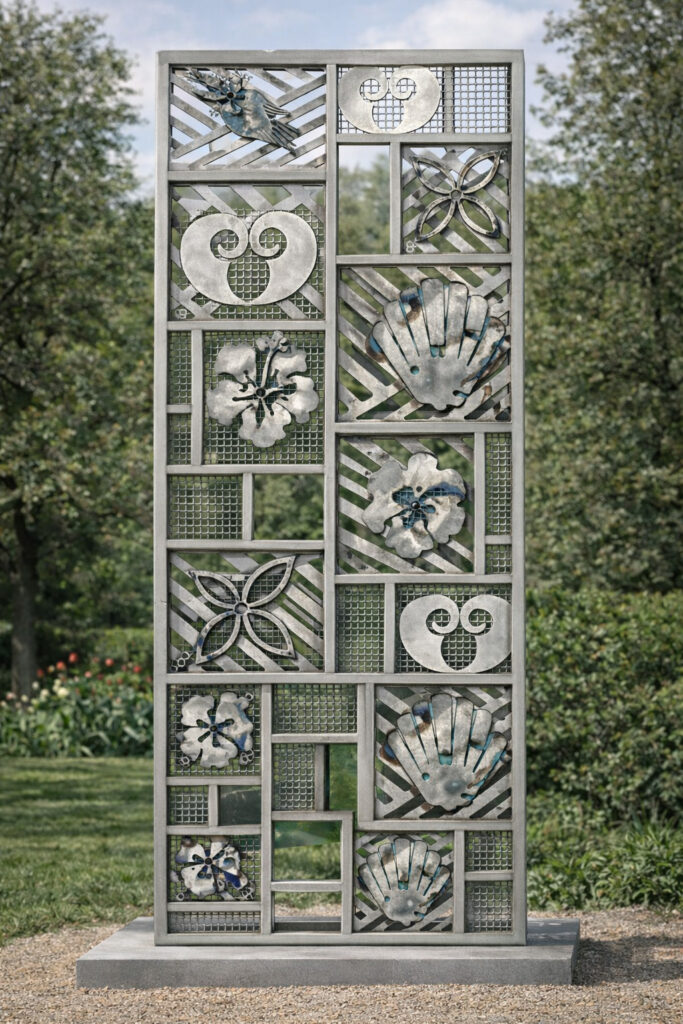
A monument methodology for preserving lineage through public art.
THE MEMORY PORTAL PROJECT
The Memory Portal Project is an evolving monument methodology created by Afatasi that reimagines how communities are remembered in public space. Rather than commemorating history through static monuments alone, it combines sculpture, genealogy, archival research, symbolic language, and emerging technologies to create living monuments that continue to grow alongside the communities they honor.
Each Memory Portal begins with people.
Working in partnership with descendants, community historians, archives, and public institutions, the methodology documents family histories, cultural memory, and place-based knowledge that have often remained absent from America’s commemorative landscape. These histories are translated into a symbolic visual language of hand-crafted Memory Tiles, integrated within monumental steel sculpture and connected to a growing digital archive through augmented reality.
The result is more than a monument.
It is a public archive.
A community landmark.
A vessel for intergenerational knowledge.
A place where memory remains active rather than fixed.
While every Memory Portal is rooted in the unique history of its community, each follows the same guiding methodology: preserve lineage, reveal overlooked histories, and create enduring monuments that future generations can inherit, expand, and steward.
The inaugural installation, Memory Portal: 1945, honors the thousands of laborers recruited from the American South to work at the Hunters Point Naval Shipyard during World War II. Their labor transformed San Francisco’s wartime economy and gave rise to the community known as the Harlem of the West. Developed through years of genealogy research with more than 350 Bayview–Hunters Point families, the monument establishes the first expression of a methodology designed to preserve lineage wherever communities face historical erasure.
Where It Began
The Memory Portal Project grew from years of exploring how augmented reality could expand the role of public art.
Beginning in 2023 with an interactive church fan and continuing through a series of artworks—including a fashion show program and sculptural prototypes—I explored how physical objects could connect audiences to genealogy, archival research, oral histories, and community memory.
Those explorations laid the foundation for The Memory Portal Project, where augmented reality now serves as an essential part of the monument methodology, connecting each Memory Portal to a living archive that continues to evolve over time.